
Home › New Hampshire › Londonderry
Foundation Repair and Basement Waterproofing in Londonderry, NH
Londonderry's 2025 hazard mitigation plan records basement flooding next to Brookview Drive going back to the 1970s, and firefighters pumping out flooded basements in the December 2008 ice storm. Call (978) 800-2819 or use the form. A person reads every request and replies with what happens next.
- Free for homeowners
- Town and state rules on this page
- Beaver Brook to the Manchester line
Ask About Basement Service in Your Area
Tell us about the basement and what the water is doing. A person reads it and replies with what happens next.
Please add your name, a 10-digit phone number and a valid email.
Your request didn't go through on our end. Please call (978) 800-2819 so it isn't lost.
Too many requests have come from this connection in a short time. Please call (978) 800-2819 and we'll take it from there.
We couldn't finish the spam check. Wait a moment and send it again, or call (978) 800-2819.
Basements in Londonderry
What's the basement problem?
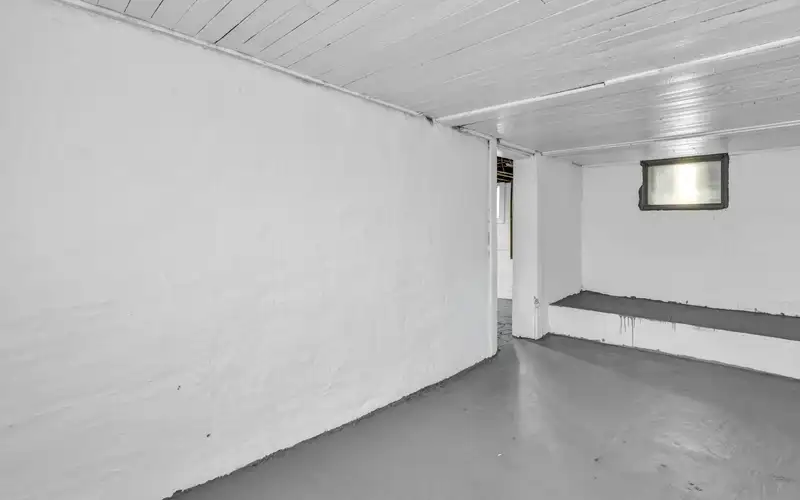
Waterproofing & Drainage
Wet walls, seepage at the floor joint and spring water in the basement, handled with interior drains, exterior work or both.
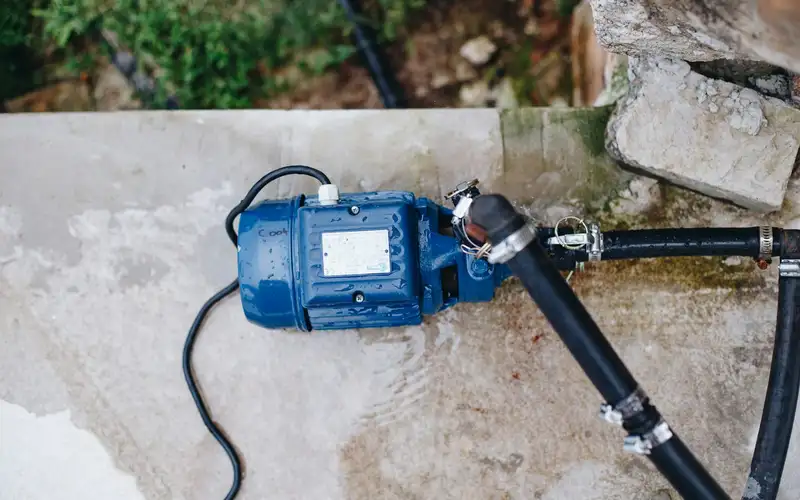
Sump Pumps
New pits, replacement pumps and battery backups, with the discharge going somewhere your town allows.

Foundation Cracks & Repair
Leaking cracks, bowing or settling walls and failing mortar in old fieldstone, with an engineer brought in when the job is structural.
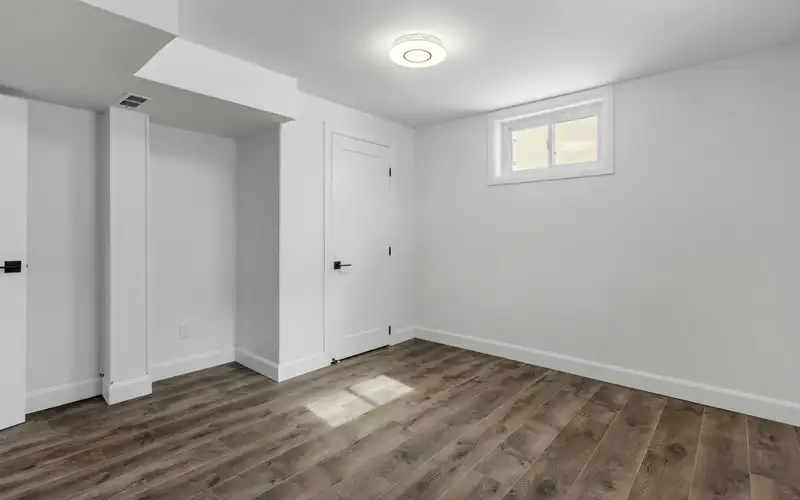
Crawl Spaces & Finishing
Damp crawl spaces sealed up, and dry basements turned into finished space with the right permits.
Not sure what it needs?
(978) 800-2819Tell us whether the water shows up after storms, in spring or all year, and we'll help you sort out what kind of job it is.
Permits
Permits and rules for basement work in Londonderry
Building permits come from Building & Zoning Enforcement at 268B Mammoth Road (603-432-1100, ext. 440), open weekdays 8:30 to 5. Building permits are still paper: the town says they "are not available through our portal," while electrical, plumbing and gas or mechanical permits can be filed on its eSuite portal (Building Division). So the permit for new drain work or a foundation repair goes in on paper, and the electrician's permit for a new sump circuit can go in online.
- Building permits
- Building & Zoning Enforcement, 268B Mammoth Rd, 603-432-1100 ext. 440; paper forms only
- Trade permits online
- eSuite (electrical, plumbing, gas/mechanical)
- Alterations and foundations
- $8 per $1,000 plus $25 application fee; $50 residential minimum (effective November 4, 2025)
- After the fact
- Double the fee
- Sewer
- Foundation drains and downspouts barred from the sanitary sewer
Posted fees. The fee schedule effective November 4, 2025 has no basement line. It prices foundation work at $8 per $1,000, the same as residential additions, alterations and renovations, plus a $25 application fee on every permit. A residential electrical alteration is $100 plus $3 per device, a plumbing alteration $100 plus $16 per fixture, a reinspection $50, and any permit pulled after the fact costs twice the normal fee.
Which jobs need a permit. The Building Division page doesn't list basement finishing, waterproofing or egress windows. New Hampshire leaves permits to the town under the NH State Building Code (the IRC as adopted by NH), and lets towns keep stricter local rules (RSA 155-A:2). The state moved to the 2024 codes on July 1, 2026, and permits may be filed under either the 2021 or the 2024 codes through December 31, 2026 (state code concurrence). Call the Building Division before finishing a basement or starting foundation or drain work.
Hiring a contractor. "In New Hampshire, contractors do not need to be licensed," the Attorney General's office says, so check references and proof of insurance, get a written contract with the scope, materials, total price and payment schedule, and treat a deposit over half the price as a warning sign (NH AG). On a contract over $5,000, the contractor has to give you written notice of your rights under RSA 359-G, which requires 60 days' written notice of a defect before you can sue (RSA 359-G). Plumbing and electrical work are licensed trades, with an exemption for owners working on their own single-family home (Mec 300; RSA 319-C). Digging outside the foundation needs a free Dig Safe ticket at least 72 hours ahead, not counting weekends and holidays (Dig Safe).
Last verified November 2026. Fees, restrictions and deadlines on this page are due for re-checking by January 2027. New England Basement Pros is a referral service. We don't pull permits or do basement work; the contractor files the permit.
Water
Where the water comes from in Londonderry
Beaver Brook and its tributaries. "The major watercourse flowing through Londonderry is Beaver Brook," says the town's Hazard Mitigation Plan Update 2025, adopted by the Town Council on May 19, 2025. The plan counts 78 homes in the FEMA flood zone, about 150 residents living there, 30 paid flood insurance losses since 1978 totaling $407,693, and five repetitive-loss properties, all single-family homes (2025 Hazard Mitigation Plan). When heavy rain fell during the December 11–12, 2008 ice storm, the Fire Department was called out to pump flooded basements, the same plan records.
Brookview Drive
Annual flooding with "basement flooding of adjacent homes" and evacuations since the 1970s, rated major. As of 2025 a study is done, flood-prone homes have been mitigated as needed, and the area still needs monitoring.
Beaver Brook
The plan lists the South Road and Gilcreast Road crossings of the brook among flood-prone town facilities.
Little Cohas Brook
The Stokes Road and Hall Road crossings are listed as flood-prone.
Shields and Todd Brooks
The Coteville Road crossing of Shields Brook is listed as flood-prone, and the South Road crossing of Todd Brook is tagged repetitive loss.
The plan also notes culvert trouble at Parmenter and High Range Roads where they meet NH 102, two culverts lost in the May 11, 2006 Mother's Day floods, and localized flooding in Tropical Storm Irene in 2011. Inside the floodplain district, no new development that would raise 100-year flood levels is allowed without a variance, and an Elevation Certificate is required when a building in a known flood zone is substantially improved, so a full basement renovation there starts with the building inspector. Check your own address on FEMA's Flood Map Service Center.
Where the pump water goes. Section 2.2(J) of the Sewer Use Ordinance bars roof downspouts, interior and exterior foundation drains, areaway drains and other groundwater or runoff from any building sewer tied to the sanitary sewer (Sewer Use Ordinance), and state rules add sump pumps by name (Env-Wq 704). The town has about 2,738 residential sewer users, and many other homes are on septic (FY2027 sewer budget overview). We didn't find a posted rule on where sump water may go, so ask Public Works; any work in the town right-of-way, such as a line to the street, needs a DPW permit at least 72 hours ahead (right-of-way permits).
Near wetlands. Wetlands and streams carry Conservation Overlay District buffers, and when buffer impacts can't be avoided, the Conservation Commission makes recommendations to the Planning Board under a 2022 policy whose mitigation options include enlarging the buffer elsewhere (buffer mitigation policy). Exterior excavation near a wetland should go to the Conservation Commission first.
Londonderry's homes
Single-family homes, many on wells and septic
Londonderry had 8,847 housing units in the state's community profile, 7,346 of them single-family homes (NHES profile, ACS 2009–2013). We didn't find an official breakdown of when they were built. Many homes outside the sewer area use septic systems under the town's own rules (Chapter XIII).
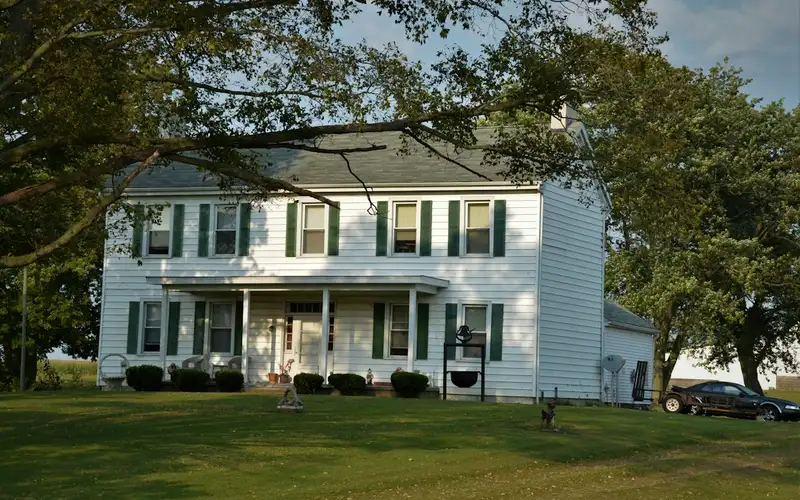
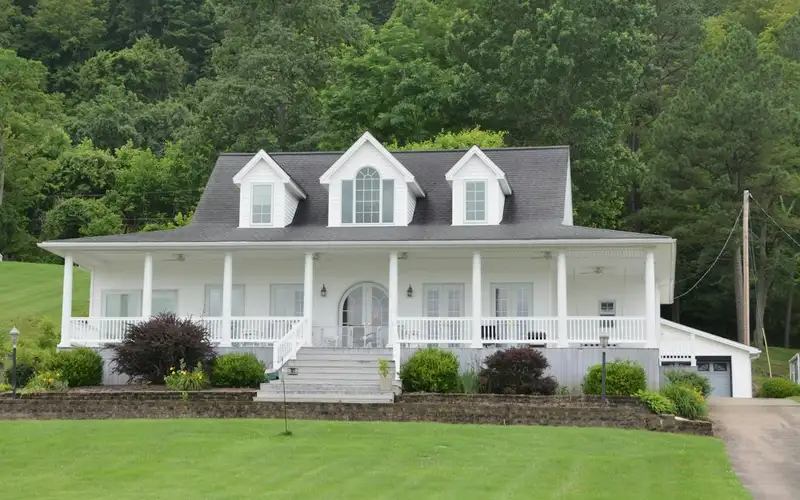
Zoning sets a floor for newer lots: in the AR-I district a lot needs at least 22,000 square feet of contiguous land above the 100-year flood elevation, and septic systems stay 75 feet from the wettest hydric soils (Zoning Ordinance). The town also has a Historic District overlay with a Heritage/Historic District Commission; if your home is in it, ask the commission early whether a new bulkhead, window well or exterior drain needs its review.
Radon
Radon in Rockingham County basements
We didn't find a town-level radon figure. Rockingham County is one of New Hampshire's three highest counties: half of the homes tested there from 2007 to 2021 measured 7.9 pCi/L or more, and statewide about 37% of 32,747 tested homes were at or above 4 pCi/L (NH DHHS data brief, August 2023). The state says to test the lowest livable area, usually the basement, recommends fixing at 4 pCi/L or higher, and gives free test kits to residents; homes on private wells can also get radon through the water (NH Radon Program). New Hampshire doesn't license mitigation contractors, so ask for national certification.
FAQ
Londonderry basement questions
Can a sump pump or foundation drain go into Londonderry's sewer?
No. The town's Sewer Use Ordinance bars connecting roof downspouts, interior or exterior foundation drains, areaway drains or any other groundwater or surface runoff to a building sewer tied to the sanitary sewer, and state rules name sump pumps outright. The town doesn't post where the water should go instead, so ask the Department of Public Works before the line is run.
What does a building permit for foundation work cost in Londonderry?
Under the fee schedule effective November 4, 2025, foundation work is $8 per $1,000 of value, the same rate as residential alterations, plus the $25 application fee charged on every permit. The residential minimum is $50, a reinspection is $50, and a permit taken out after the work is done costs double.
Which Londonderry roads does the town's flood plan name?
The 2025 Hazard Mitigation Plan rates Brookview Drive a major flood problem and lists flood-prone road crossings among the town facilities at risk: South Road and Gilcreast Road on Beaver Brook, Stokes Road and Hall Road on Little Cohas Brook, Coteville Road on Shields Brook and South Road on Todd Brook.
Should I test for radon before finishing the basement?
It's worth doing. Londonderry is in Rockingham County, where half of the homes tested from 2007 to 2021 measured 7.9 pCi/L or higher, according to the state's August 2023 data brief. NH DHHS offers free test kits, and homes on private wells can also get radon through the water.
What does it cost me to use New England Basement Pros?
Nothing. Asking is free for homeowners; the contractor prices the job, and the price and contract are between you and them.
Nearby