
Home › New Hampshire › Hudson
Foundation Repair and Basement Waterproofing in Hudson, NH
Hudson's own master plan says its low-lying, poorly drained areas have a water table at or near the surface for most of the year, and about 11% of the town is floodplain. Call (978) 800-2819 or use the form. A person reads every request and replies with what happens next.
- Free for homeowners
- Town and state rules on this page
- Merrimack River to Ottarnic Pond
Ask About Basement Service in Your Area
Tell us about the basement and when the water shows up. A person reads it and replies with what happens next.
Please add your name, a 10-digit phone number and a valid email.
Your request didn't go through on our end. Please call (978) 800-2819 so it isn't lost.
Too many requests have come from this connection in a short time. Please call (978) 800-2819 and we'll take it from there.
We couldn't finish the spam check. Wait a moment and send it again, or call (978) 800-2819.
Basements in Hudson
What's going on in the basement?
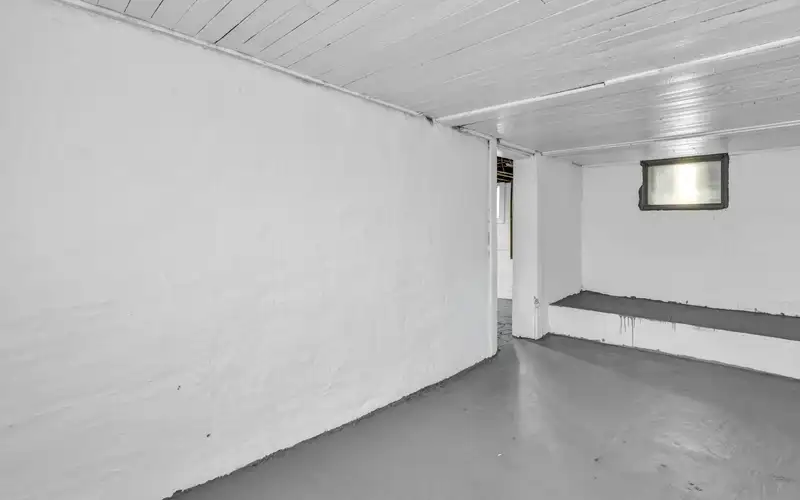
Waterproofing & Drainage
Wet walls, seepage at the floor joint and spring water in the basement, handled with interior drains, exterior work or both.
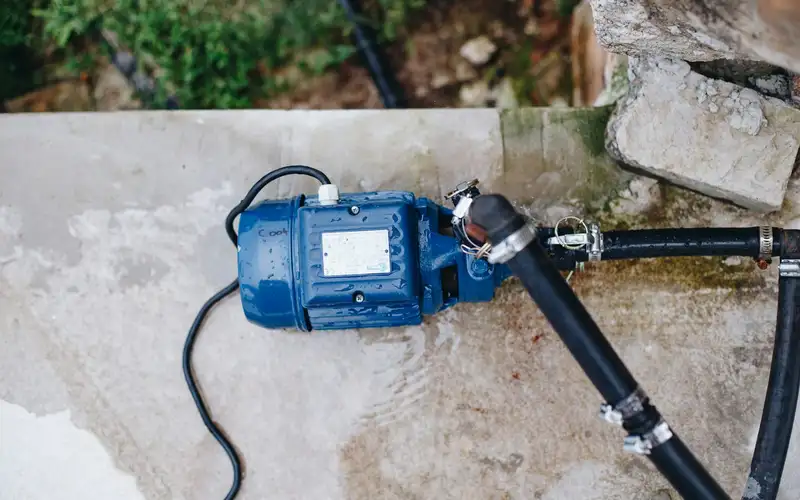
Sump Pumps
New pits, replacement pumps and battery backups, with the discharge going somewhere your town allows.

Foundation Cracks & Repair
Leaking cracks, bowing or settling walls and failing mortar in old fieldstone, with an engineer brought in when the job is structural.
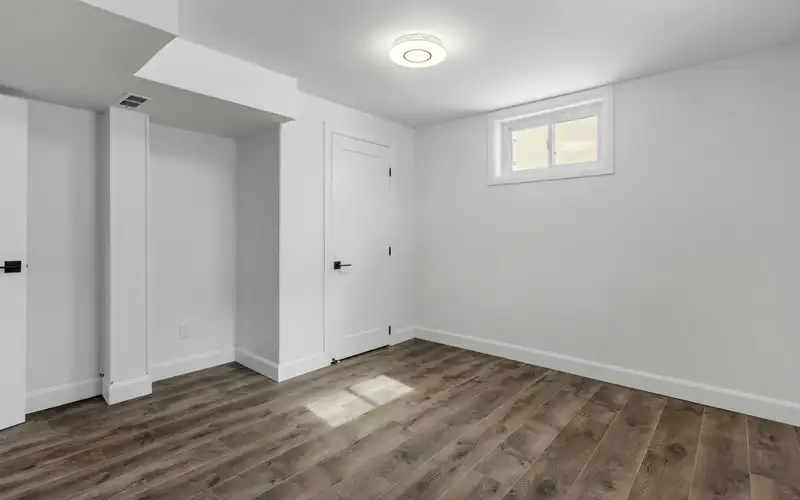
Crawl Spaces & Finishing
Damp crawl spaces sealed up, and dry basements turned into finished space with the right permits.
Not sure what it needs?
(978) 800-2819Tell us when the water appears and how long it stays, and we'll help you work out what kind of job it is.
Permits
Permits and rules for basement work in Hudson
Building permits in Hudson come from the Inspectional Services Division, part of the Fire Department, at Town Hall, 12 School Street, open weekdays 8 to 4:30 (Inspectional Services). There's no online portal: applications are uploaded through the town's file transfer link with the property address in the title, or emailed, mailed or left in the drop box, and the town says it will call when the permit is ready and tell you the fee (Permits and Applications).
- Permits issued by
- Inspectional Services Division, Hudson Fire Department, Town Hall, 12 School St
- How to file
- File transfer upload, email, mail or drop box; no online portal
- Fee schedule
- Revised June 15, 2023
- Working without a permit
- $250 (Fire Department)
- Inspections
- 24 hours' notice
- Floodplain permits
- Town Engineer
Which basement jobs need a permit. The permits page doesn't say whether finishing a basement, cutting in an egress window or repairing a foundation needs a building permit; ask the division before the work is booked. On the fee schedule revised June 15, 2023, a residential plumbing permit is $75, a re-inspection is $75, and the Fire Department charges $250 for working without a permit; finished basements have no line of their own (Application Fee Schedule). Every inspection needs 24 hours' notice (electrical permit form). New Hampshire moved to the 2024 State Building Code on July 1, 2026, and through December 31, 2026 permits may be filed under either the 2021 or the 2024 codes (state code change).
Contractor rules. New Hampshire doesn't license general or home improvement contractors; in the Attorney General's words, "In New Hampshire, contractors do not need to be licensed." Get references, proof of insurance and a written contract with the scope, materials, total price and payment schedule before paying anything, and treat a request for more than 50% down as a warning sign (NH Attorney General). Plumbing and electrical work need licensed trades unless you're doing it in your own single-family home, and permits and inspections still apply (Mec 300; RSA 319-C). Contracts over $5,000 must include the RSA 359-G notice on resolving defects before a lawsuit (RSA 359-G), and outside excavation needs a Dig Safe ticket at least 72 hours ahead, weekends and holidays not counted (Dig Safe; RSA 374:51).
Last verified November 2026. Fees, restrictions and deadlines on this page are due for re-checking by January 2027. New England Basement Pros is a referral service. We don't pull permits or do basement work; the contractor files the permit.
Water
Where the water comes from in Hudson
A high water table. The Natural Resources chapter of Hudson's master plan says low-lying areas with poorly or very poorly drained soils "have been found to have a high-water table (at or near the surface) throughout most of the year," and that steep slopes have only a very shallow layer of soil over bedrock (Natural Resources chapter). The same chapter puts floodplain at over 2,000 acres, about 11% of the town, and requires homes in special flood hazard areas to have the lowest floor, including the basement, at or above the 100-year flood level.
Merrimack River east bank
The plan places floodplain along the river's east bank; it also includes a photo of the 1936 flood at Central Street.
Second Brook
One of the two watersheds the plan names, after the river, for floodplain.
Ottarnic Pond
Its watershed holds floodplain too, and the plan says the aquifer is most productive around the pond.
Flood permits. Chapter 218, Flood Damage Prevention, adopts the Hillsborough County flood study and maps dated September 25, 2009, with panels revised April 18, 2011. All proposed development in a special flood hazard area needs a floodplain permit from the Town Engineer, and a basement, any floor below grade on all sides, counts as the lowest floor (Chapter 218). Search your address on FEMA's Flood Map Service Center before planning a finished basement.
Where the pump water goes. Public sewer covers only the denser areas along Ferry and School Streets and the area bounded by Melendy Road, Pelham Road and the Merrimack River; elsewhere homes are on septic, and the sewage is treated at Nashua's plant (Community Facilities chapter, adopted May 10, 2023). We didn't find a Hudson rule naming sump pumps. State rules say sump pumps and foundation drains "shall not be directly or indirectly connected to a public sewer" (Env-Wq 704), and Hudson's stormwater chapter exists to prohibit non-stormwater discharges into the town's drainage system, with fines of $275 for a first offense and $550 after that, per day (Chapter 290). Ask the town where your discharge line should end. Sewer connections need a permit and a Hudson-licensed drain layer (Sewer Utility policies), and the town says most backups start in pipes on the property, which are the homeowner's responsibility (sewer FAQ).
Wetland buffer. The Wetland Conservation District includes a 50-foot buffer around wetlands and surface waters for homes, and no structures, regrading or fill may go there without a Planning Board Conditional Use Permit, with Conservation Commission comment (§334-35; §334-36). An outside drain or regraded slope near a wet edge needs that line found first.
Hudson's homes
A town of single-family houses, mostly on septic
Hudson had 10,080 housing units in 2020: 81% single-family, 17% multifamily and 2% manufactured homes (Population and Housing chapter, 2025 update). Outside the sewered core, those houses rely on septic systems, so sump water and footing drains have to be piped to a spot on the lot that keeps them away from the leach field and off the neighbor's yard.
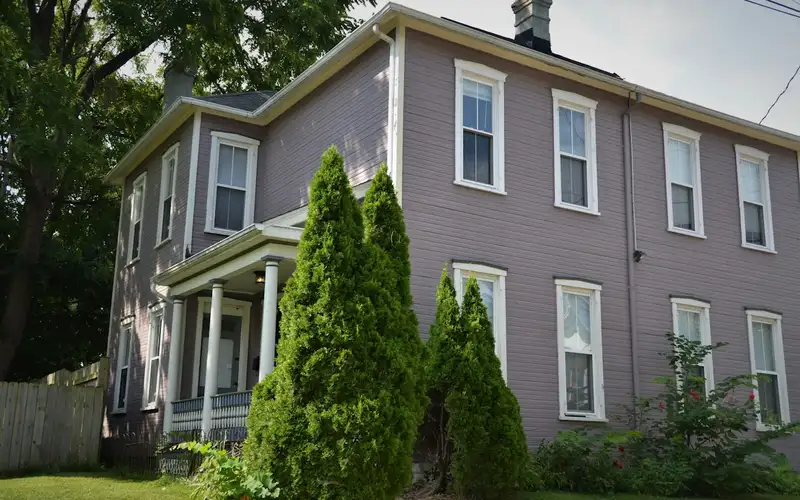
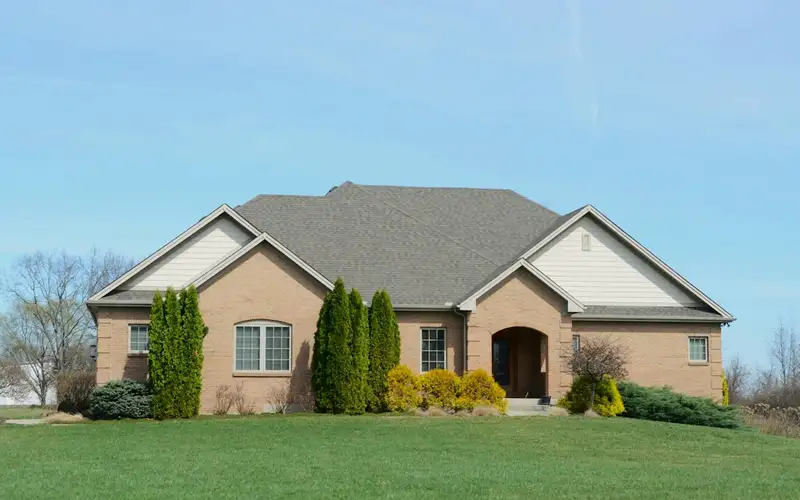
We didn't find a local historic district on the town's list of boards and committees (Boards and Committees), so exterior basement work such as a bulkhead or window well goes through the usual building and, where it applies, wetland review.
Radon
Radon in Hudson basements
The state publishes no Hudson radon figure, and Hillsborough County has no median in the state's August 2023 data brief. Across New Hampshire, about 37% of the 32,747 homes tested between 2007 and 2021 came in at or above 4 pCi/L, and the brief recommends retesting every two years or after renovations (NH radon data brief). The state Radon Program says testing is the only way to know and offers free kits at (603) 271-1708 (NH Radon Program).
FAQ
Hudson basement questions
Why do some Hudson basements stay wet all spring?
The town's master plan says low-lying areas with poorly or very poorly drained soils have a high water table, at or near the surface, throughout most of the year. Houses in or near those areas can see groundwater pushing in long after a storm has passed.
Does Hudson treat a basement as the lowest floor in a flood zone?
Yes. Hudson's flood damage prevention ordinance defines a basement as any floor below grade on all sides and counts it as the lowest floor, and all development in a special flood hazard area needs a floodplain permit from the Town Engineer.
Can I put a drain or regrade near a wetland in Hudson?
Not without approval in most cases. Hudson keeps a 50-foot buffer around wetlands and surface waters for homes, and structures, regrading or fill there need a Conditional Use Permit from the Planning Board, with comment from the Conservation Commission.
Who fixes a sewer backup into my basement?
The town says most backups start in the pipes on the property, which are the homeowner's responsibility. If you think the problem is in the street line, call the Highway Department at 603-886-6018.
What does it cost me to use New England Basement Pros?
Nothing. Asking is free for homeowners; the contractor prices the job, and the price and contract are between you and them.
Nearby